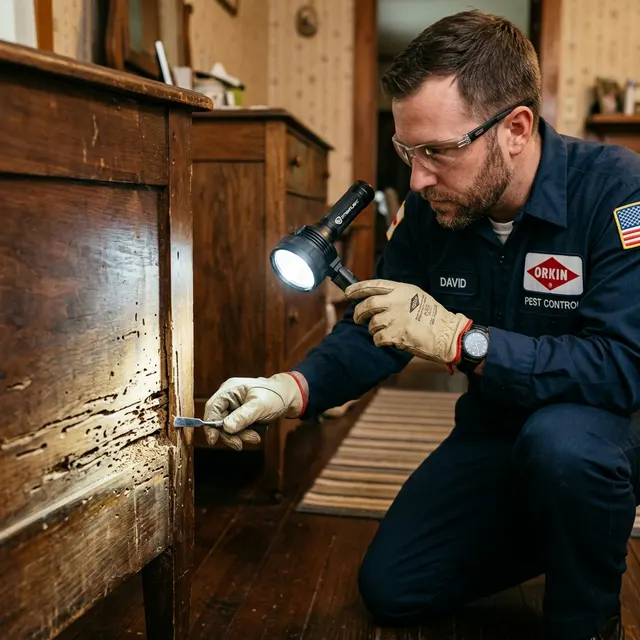
Unlike pre-construction treatment, which forms a barrier in the soil before foundations are laid, post-construction termite treatment is performed on existing buildings. In Chennai's highly clayey soil, subterranean termites are incredibly common. They build mud tubes along walls, traveling from deep under the slab directly into your wooden wardrobes, door frames, and modular kitchens.
Subterranean termites feed on cellulose, and because their activity happens behind plasterboards and inside solid wood frames, they cause thousands of rupees of damage before you even notice them. The most scientific and effective way to eliminate them in an already built home is the **Drill-Inject-Seal** method. Here is how it works.
The "Drill-Inject-Seal" Method Explained
This process creates a continuous chemical termiticide barrier around the perimeter of the building and along the internal walls. The method is divided into three key steps:
1. Drilling
Certified technicians use heavy-duty electric drills to make holes at the skirting level of walls. The holes are typically drilled at 1-foot intervals along all internal and external walls. The diameter of the holes is kept around 12mm to ensure minimal cosmetic impact on your tile grout or marble floors.
2. Injecting
A specialized, non-repellent termiticide emulsion (such as Fipronil or Imidacloprid) is injected into each hole under pressure. A pressure nozzle ensures that the liquid reaches deep into the sub-slab soil, coating the soil particles. Since subterranean termites must return to the soil to drink water, they must pass through this chemical barrier. A non-repellent termiticide is critical: termites cannot detect it, so they walk through it, carry the chemical back to their main nest, and pass it to the queen, destroying the entire colony.
3. Sealing
Once injection is complete, the drilled holes are carefully sealed using white cement or waterproof colored grout that matches your existing flooring. After sealing, the treated spots are practically invisible.
Signs You Need Post-Construction Termite Treatment
- Mud tubes: Pencil-sized mud structures running up your walls, particularly in damp areas or bathroom corners.
- Hollow sounding wood: Tap your wooden wardrobes or door frames; if they sound paper-thin and hollow, termites have eaten the interior.
- Discarded wings: During pre-monsoon or summer evenings, swarms of reproductive termites ("Alates") fly toward light sources, shedding their wings on window sills.
- Buckling paint: Termites release moisture as they feed, causing paint on walls or wooden trim to bubble and peel, looking like water damage.
How Long Does the Treatment Last?
A professional post-construction termite treatment using top-grade termiticides provides strong protection for 5 to 8 years. At Sri krishna Pest Control, we offer complete peace of mind with a written **5-year warranty** on our full post-construction treatments. If any termites re-appear, our technicians will re-drill and treat the area for free.
🐜 Save Your Wooden Interiors Today
Don't wait for termites to hollow out your furniture. Srikrishna Pest Control provides expert post-construction termite treatment across T Nagar, Velachery, Anna Nagar, Tambaram, and all Chennai suburbs. Book a free home termite check.
📅 Book Termite Inspection 📞 Call +91 81485 73149